Gaps #95560
openClinical Pharmacy - CDR (Cytotoxic Drug Reconstitution)
0%
Description
Introduction
CDR Ordering,Preparation & Administration
CDR is the process by which cytotoxic drugs (anti-cancer agents) are prepared for
administration. It is a process usually performed by clinical pharmacists under strict aseptic
conditions to protect the handler, the drug and the environment – given the understanding
that cytotoxic drugs are considered hazardous materials which have the ability to cause DNA
damage that could ultimately lead to the development of cancer. This is why it is extremely
important for people to practice caution when they are handling cytotoxic drugs and
substances.
Current Situation
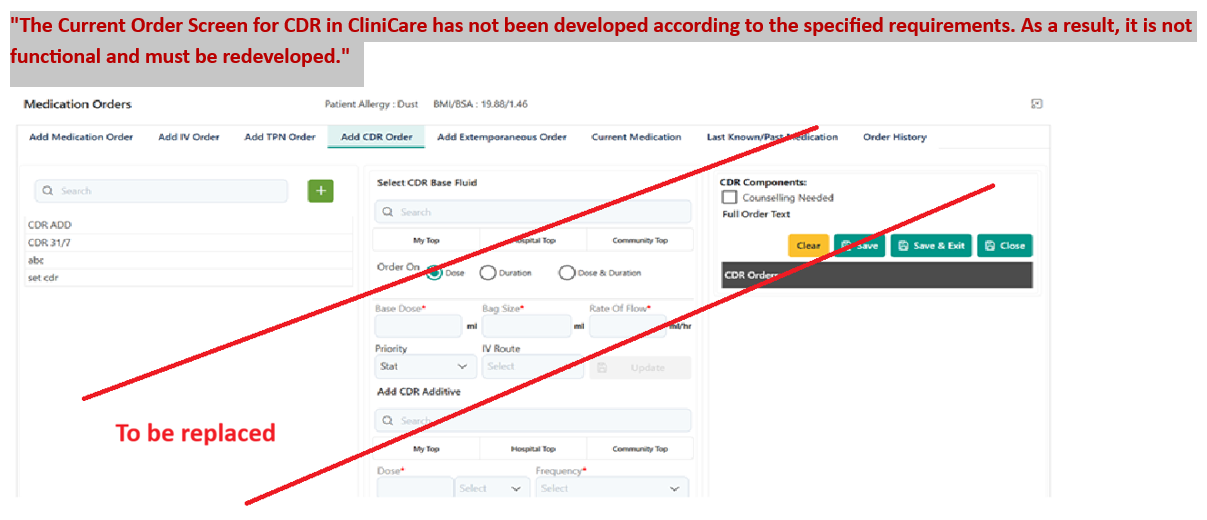
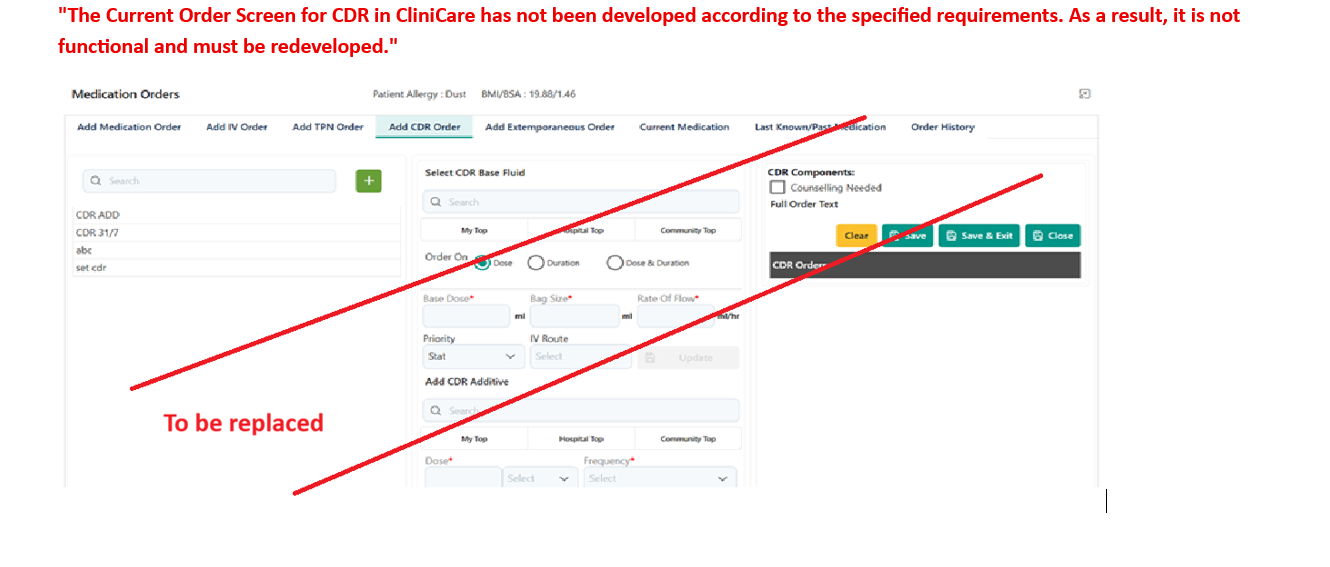
The current CDR Order screen in CliniCare was not developed in accordance with the specified requirements. Consequently, it is non‑functional and requires complete redevelopment. Notably missing information are Regimen Code, Regimen Details, Cycle Information , Cycle Duration & Cycle Start and Cycle End Date.
What is required
1. Reconstruct the CDR Order Function in CliniCare with the required enhancement.
2. Development the CDR component in MedCare PhIS to facilitate screening, reconstitution (preparation) and dispensing.
Impact
In the absence of a proper CDR ordering module, the impacts are serious as chemotherapy drugs are high risk and require precise handling.
Clinical Impacts
• Medication errors: Incorrect dose, wrong cycle number, or missing dilution instructions can directly harm patients.
• Safety risks: Cytotoxic drugs are hazardous; improper documentation increases risk of staff exposure or patient toxicity.
• Loss of traceability: Without structured orders, it’s harder to audit or investigate adverse events.
Operational Impacts
• Verification gaps: No standardized checklist for pharmacist approval leading to higher risk of missed safety checks.
• Coordination issues: Oncology, pharmacy, and nursing teams struggle to synchronize cycles and regimens.
Financial & Compliance Impacts
• Wastage of expensive drugs: Incorrect preparation leads to discarded cytotoxic agents, which are costly.
• Billing errors: Chemotherapy cycles may not be captured correctly, leading to revenue leakage.
• Accreditation risks: HIS not meeting oncology safety standards (e.g., MOH, JCI) jeopardizes compliance.
• Litigation exposure: Inadequate documentation weakens medico legal defense in case of adverse outcomes.
How CDR Is Ordered
1. Clinician (Dr) enters chemotherapy (CDR) prescription order in CliniCare
2. Pharmacist verifies and validates the order in MedCare.
3. Pharmacist then prepares the cytotoxic drugs according to strict safety protocols before dispensing.
Use case (CliniCare):
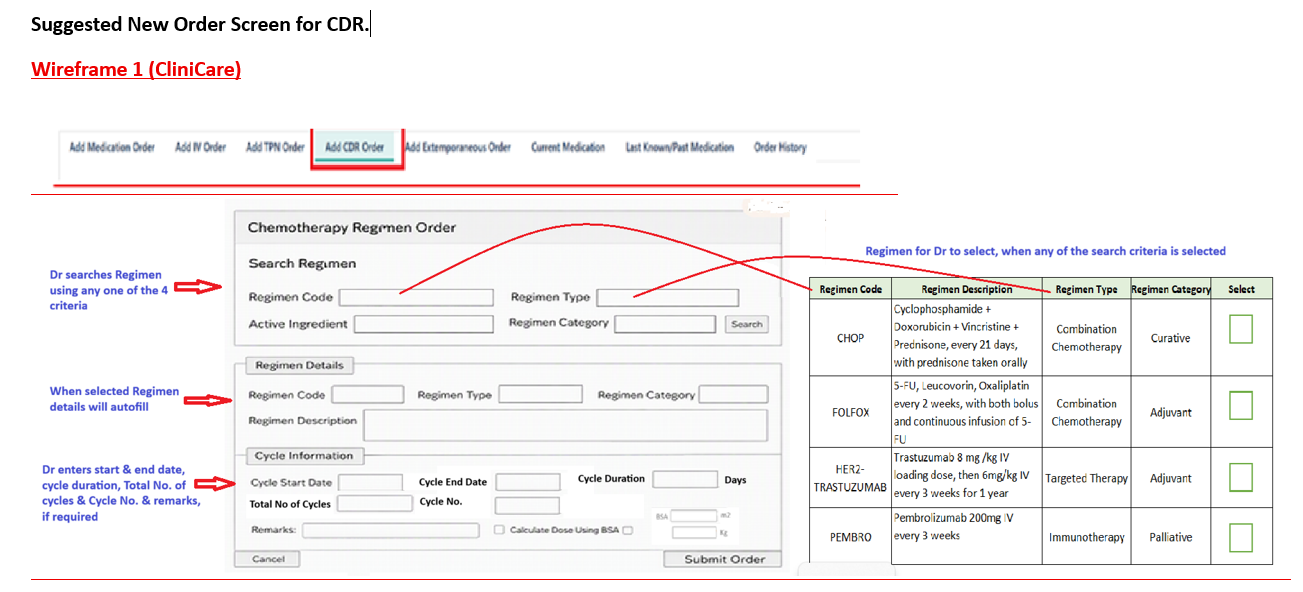
1. Dr. clicks on “Add CRD Order” Tab
2. Dr. “Search Regimen” by clicking on any of the search criteria, such as “Active Ingredient, Regimen Category,
Regimen Type, or Regimen Code”
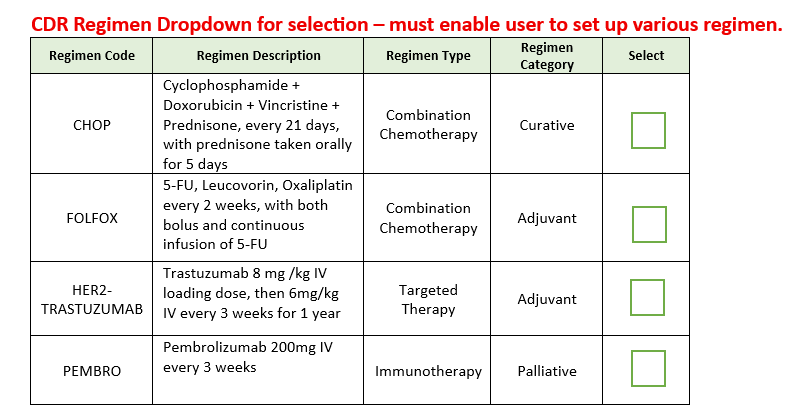
3. A dropdown list will be available for selecting the required Regimen.
4. Once the required Regimen is selected, relevant details will auto-fill the: Regimen Order Details.
5. Dr enters Cycle Start & Cycle End Date
6. Dr enters Cycle Duration
7. Dr enters Total number of Cycles & Cycle Number
8. Dr. save (submit) order & exit
9. Ordered item will flow to Pharmacy module.
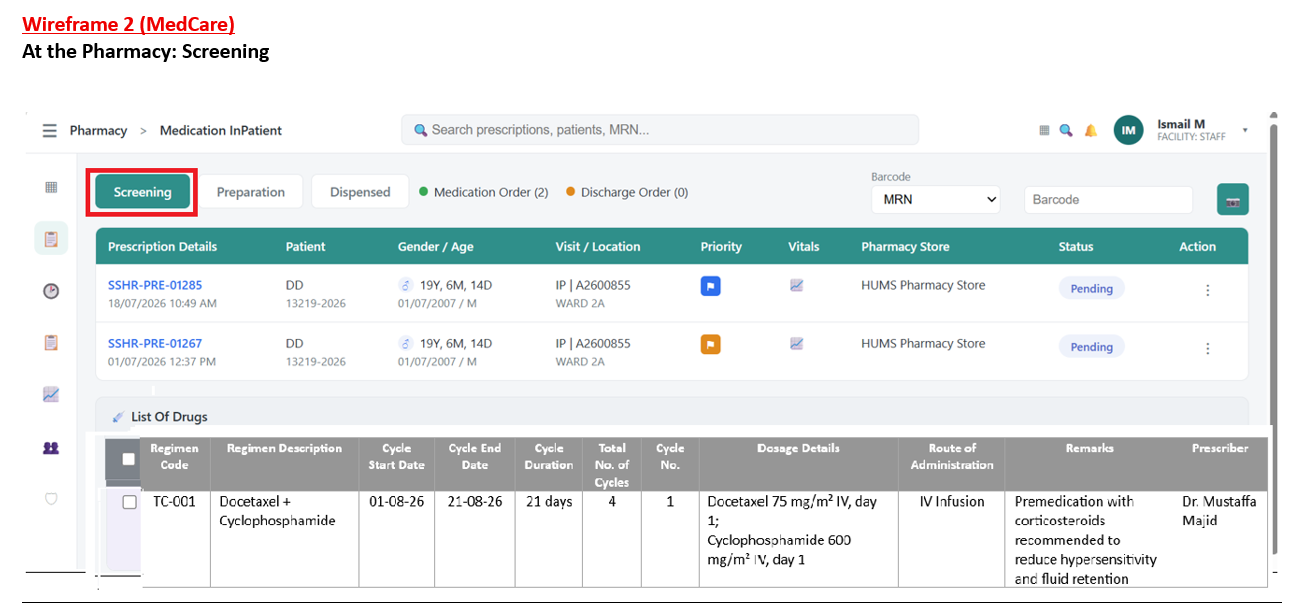
Use case (MedCare) :
1. Pharmacist receives order from doctor (CliniCare Medication Order MedCare Screening)
2. Pharmacist clicks on “Screening” Tab to verify the order to ensure patient safety & treatment accuracy.
The pharmacist would require access to the patient’s case notes.
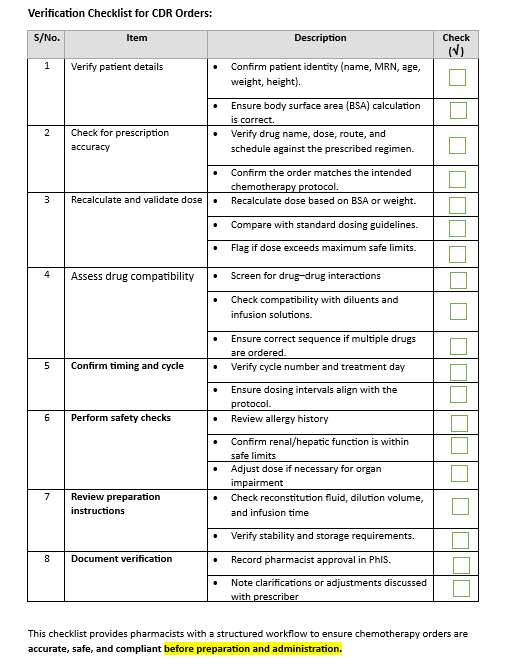
Pharmacist Verification :
• The prescribed chemo regimen is reflected in the MedCare Pharmacy Module.
• The Clinical Pharmacist reviews the order for accuracy, appropriateness, and patient safety.
• Checks include:
o Confirm regimen code and description match the physician’s order.
o Check cycle number, start/end dates, and total cycles against the treatment plan.
o Patient-Specific Checks - Verify patient identifiers (name, MRN, age, weight, height).
o Review allergies, comorbidities, and concurrent medications.
o Dosage validation: Correct drug and dose based on body surface area (BSA).
Pharmacist must ensure each drug dose is appropriate for the patient’s BSA/renal/hepatic function.
o Compatibility with other medications.
o Timing and cycle of chemotherapy - Confirm cycle duration and interval (e.g., 14-day, 21-day).
Check includes sufficient recovery time from prior cycle (blood counts, organ function).
• If discrepancies are found, the pharmacist contacts the prescriber for clarification.
3. Preparation (Reconstitution)
o Once verified, the pharmacist approves the order. The order is assigned to the CDR preparation workstation
for aseptic preparation.
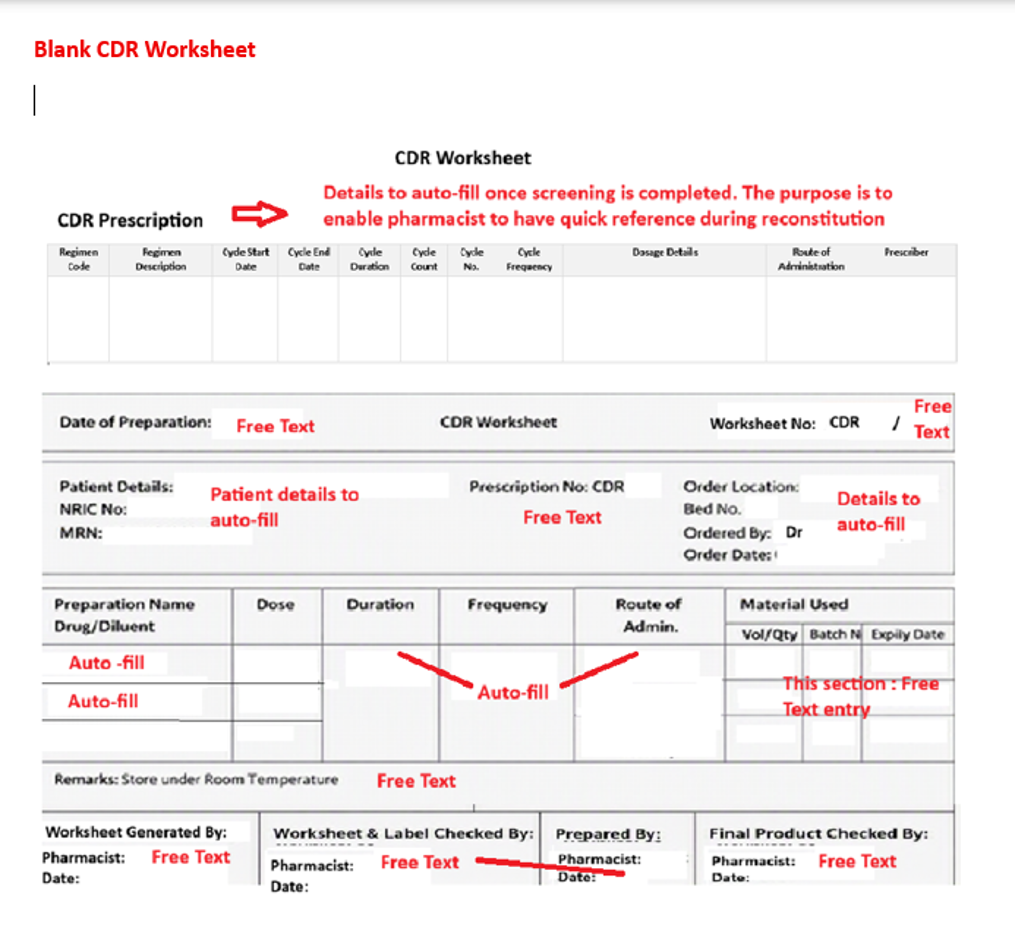
o The patient’s demographic details and drug regimen name should auto-fill the CDR worksheet.
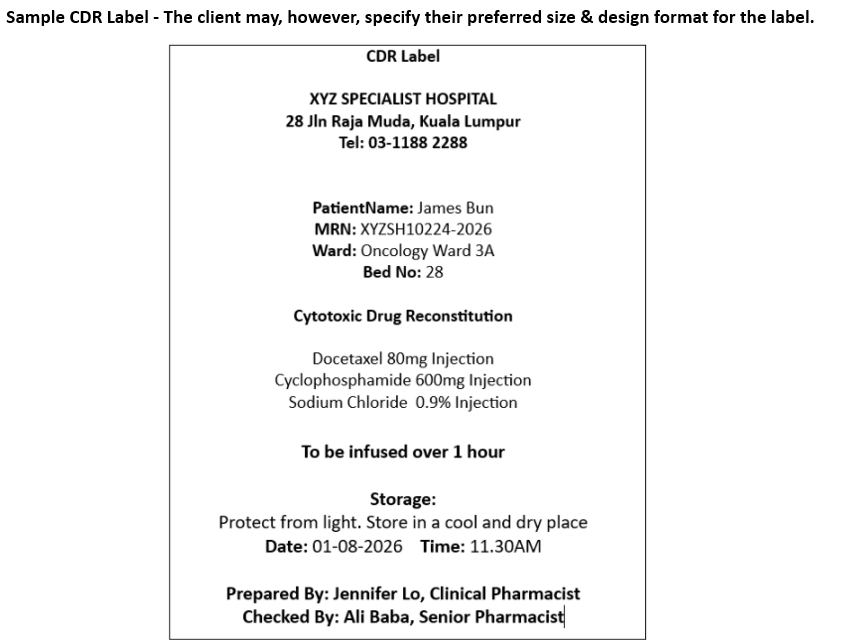
o The required labels are subsequently printed.
NOTES:
• Cytotoxic drugs are reconstituted in a controlled environment (biosafety cabinet/sterile room).
• Strict aseptic technique and personal protective equipment (PPE) are mandatory for the pharmacist who
prepares the medication.
4. Dispensing
• The prepared drugs are labelled with patient details, drug info, and handling instructions.
• Then the drugs are dispensed (supplied) to the oncology ward or clinic for administration.
• Documentation must be completed in the PhIS (Pharmacy Information System) for traceability and compliance
with oncology treatment standards.
Work Process: Prescription -> Screening -> Preparation -> Dispensing of CDR
1. Doctor prescribes CDR regimen ->
2. Pharmacist screens (verifies) the prescription →
3. Pharmacist calculates dose based on patient’s BSA (e.g., 1.8 m² → 1350 mg) →
4. Pharmacist checks/validates the following for patient safety:
• Allergy history.
• Drug dose is appropriate for the patient’s BSA/renal/hepatic function
(if normal, no adjustment is needed) →
• Compatibility with other medications.
• Timing and cycle of chemotherapy
• Cycle duration and interval (e.g., 14-day, 21-day).
5. Pharmacist assigns CDR order to workstation.
6. Pharmacist (usually a clinical pharmacist) prepares the medication
7. Pharmacist labels the prepared the CDR medication
8. Pharmacist dispense (release) the CDR medication to the Oncology Ward for administration.
9. Pharmacist documents the completion of the task.
CDR Worksheet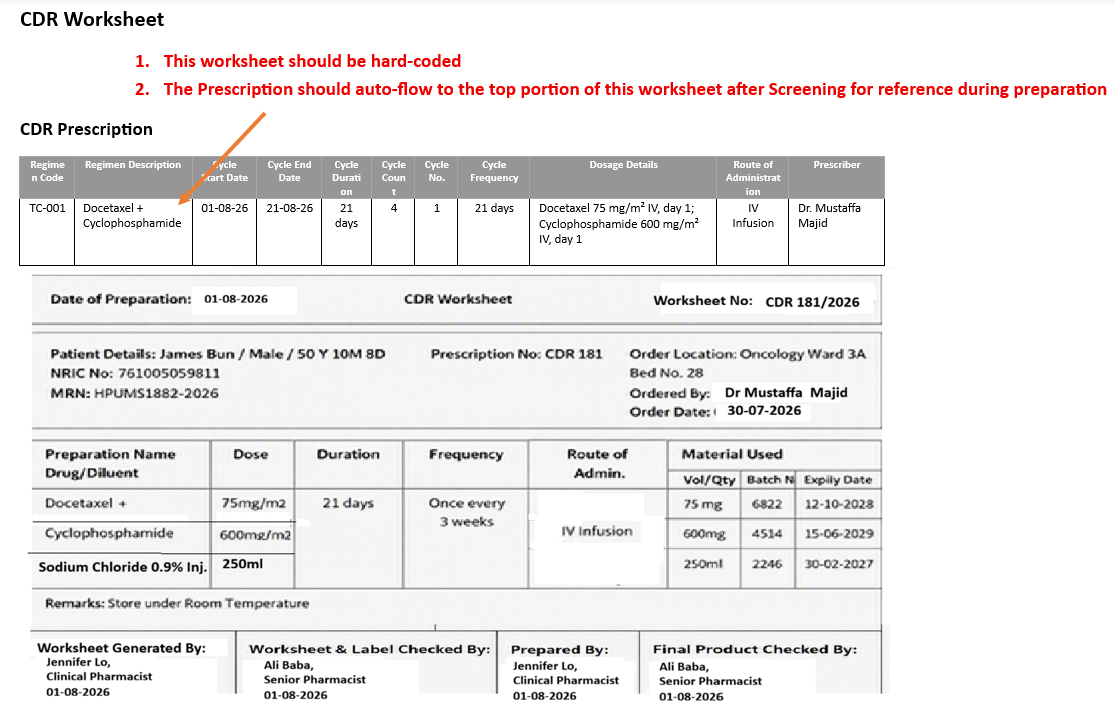
Files